Helmet Safety Standards in Pakistan: DOT, ECE and Fake Stickers
13 min readBy Rooh Ullah
Last updated: 25 October 2026 (laws, standards and labels checked 15 October 2026)
Quick answer: Pakistani law requires a crash helmet but names no safety standard, so the helmet safety standards you will meet in Pakistan are foreign: DOT (US, self-certified by the maker), ECE 22.06 (Europe, lab-tested before sale), Snell (voluntary) and China's CCC. Nobody in Pakistan checks the sticker for you. Read the label, then check the fit.
Key facts (as of October 2026)
- The law: section 89-A of the Provincial Motor Vehicles Ordinance 1969 requires a crash helmet for rider and pillion, but the law does not prescribe a helmet standard (Pakistan Safety Council).
- A Pakistani standard exists on paper: the Ministry of Science and Technology developed a national helmet standard in July 2022 and a standards committee recommended it for PSQCA's mandatory list (Pakistan Today). We have found no helmet on sale that carries it.
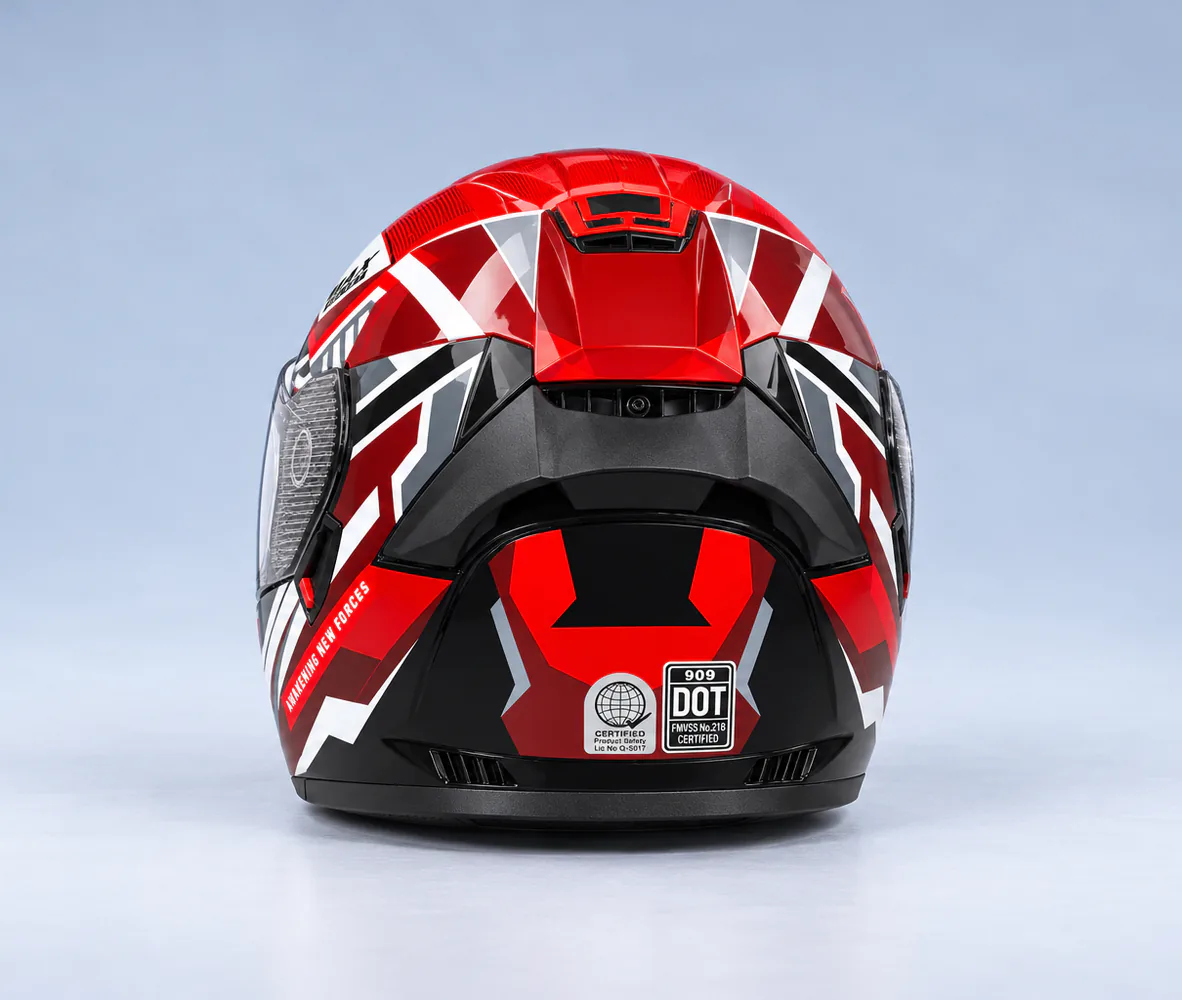
- DOT is the US rule FMVSS No. 218. The maker certifies its own helmet; the label must sit on the outside back of the shell, 1 to 3 inches above the bottom edge (49 CFR 571.218).
- ECE 22.06 helmets carry a label sewn onto the chin strap with an E in a circle and an approval number starting 06 (Singapore Police Force).
- Fines (as of October 2026): Rs 2,000 for no helmet in Punjab (24 News HD, 14 May 2026); a Rs 10,000 e-challan has been reported in Karachi (ProPakistani, 9 May 2026).
- Why it matters: correct helmet use can cut the risk of death in a crash by more than six times and the risk of brain injury by up to 74% (WHO).
What Are the Helmet Safety Standards Used in Pakistan?
Pakistan has no helmet test that a buyer can look up, so every certification mark on a helmet sold here comes from another country's system. These are the ones you will actually see, and what each one can and cannot tell you:
| Standard | Country / body | Who tests it | Where the label is | Can you check it from Pakistan? |
|---|---|---|---|---|
| DOT (FMVSS No. 218) | US Department of Transportation | The maker certifies itself; the US regulator tests samples after sale, in the US | Outside back of the shell, plus an inside label | No. A DOT mark is the maker's claim |
| ECE 22.06 | UN Regulation No. 22, used in Europe and many other countries | An approved lab before sale, plus production checks | Fabric label sewn onto the chin strap; the visor has its own E-mark | Partly: the label format is hard to fake well |
| Snell M2025 | Snell Memorial Foundation (voluntary) | Snell's own lab, stricter than DOT | Snell sticker with a serial number inside the helmet | Yes: Snell publishes its certified models (smf.org) |
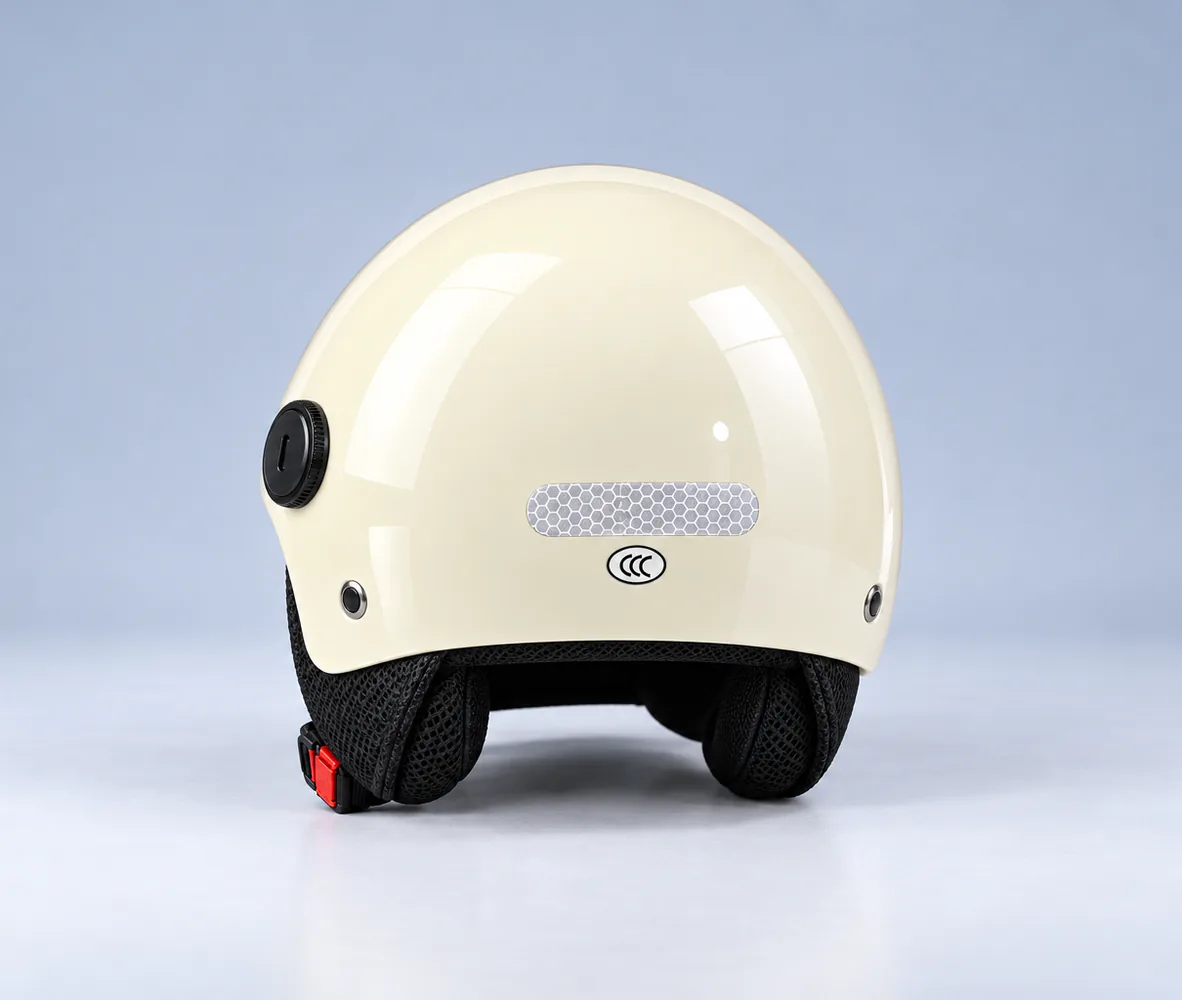
| CCC | China Compulsory Certification | Chinese certification bodies; helmets for sale in China need it under GB 811 | Small CCC mark on the shell | No |
| PS / ICC | Philippines (DTI Bureau of Product Standards) | Philippine sampling of each import batch | Holographic sticker with a licence or serial number | No: it describes a helmet cleared for the Philippine market |
| Pakistan national standard | Ministry of Science and Technology / PSQCA | Not yet enforced | — | Not prescribed by law |
Snell's M2025 standard comes in two versions, M2025D aligned with DOT and M2025R aligned with ECE 22.06, both with oblique (rotational) impact tests (Snell M2025). China moved motorcycle helmets into compulsory CCC certification under GB 811, which GB 811-2022 replaced in July 2023 (China Certification).
Does Pakistani Law Require a Certified Helmet?
No. The law requires a helmet, not a certified one.
- The rule: "No person shall drive, or ride the pillion seat of, a two-wheeled motor vehicle except when he is wearing a crash helmet" (section 89-A, PMVO 1969, quoted by the Pakistan Safety Council). The same page states that the law "does not prescribe a standard for motorcycle helmets".
- The national standard: the Lahore High Court directed PSQCA to develop one after a 2018 petition, and the Ministry of Science and Technology announced a Pakistan National Standard for Helmet in July 2022, recommended for PSQCA's mandatory list (Pakistan Today). We have not found a notification that made it mandatory, so treat it as not yet enforced.
- What police check: that you are wearing a helmet, rider and pillion. Lahore made helmets compulsory for both in January 2025 (Dunya News) and Islamabad from July 2025 (Geo News).
| Where | No-helmet fine (as of October 2026) | Source |
|---|---|---|
| Punjab, including Lahore | Rs 2,000, unchanged in the May 2026 fine revision | 24 News HD |
| Karachi (Sindh e-challan, TRACS cameras) | Rs 10,000 reported | ProPakistani |
| Islamabad | Rider and pillion must wear one; we could not find a current official fine amount, so check with Islamabad Traffic Police | Geo News |
So a Rs 700 roadside "topi" is legal and a Rs 12,000 DOT-labelled helmet is no more legal than it. The difference is what happens to your head, not to your challan.
How Do You Read a DOT Label?
The US rule spells out the label exactly (49 CFR 571.218, S5.6). On a genuine DOT helmet:
- On the outside back of the shell, centred, 1 to 3 inches (2.5 to 7.6 cm) above the bottom edge, there is a label with, from top to bottom: the maker's name or brand, the precise model, the symbol DOT (at least 1 cm tall), FMVSS No. 218, and CERTIFIED.
- Inside the helmet, a permanent label readable without removing padding gives the maker, the size, and the month and year of manufacture.
The US regulator, NHTSA, warns that DOT stickers are sold separately and counterfeited, and that a sticker on its own does not mean the helmet complies. Its brochure on unsafe helmets also points to a firm foam liner about one inch thick and sturdy chin straps with solid rivets as signs of a real helmet (NHTSA).
What this means in practice: a label with the model name and "FMVSS No. 218 CERTIFIED", in the right place, plus an inside label, is consistent with a real DOT helmet. A bare "DOT" sticker with no model and no standard number is not. Our DOT certified helmet price guide lists every DOT-labelled helmet we sell and what it costs.
How Do You Read an ECE 22.06 Label?
ECE approval is tested before sale, so its label carries more information (Singapore Police Force, September 2025; SHARP, UK Department for Transport):
| Part of the label | What it means | Example |
|---|---|---|
| E in a circle + number | The country that granted approval | E11 = United Kingdom, E3 = Italy |
| Number starting 06 | Approved to ECE 22.06 (22.05 starts with 05) | 06 1234 |
| J, P or PJ | Open face (J), full face (P), modular approved both ways (PJ) | P/J |
| Serial number | The production serial | -0005678 |
The label is a fabric tag, usually sewn onto the chin strap. The visor carries its own E-mark. A modular helmet marked P/J was tested to be ridden with the chin bar up as well as down; one marked only P was not.
In Pakistan, genuine ECE 22.06 helmets come from international brands and start well above Rs 20,000. Our imported helmet price in Pakistan guide has dated prices for LS2, HJC and Arai, none of which we sell.
What Do the Labels on Our Helmets Actually Say?
This is the part no rulebook can tell you. When a helmet joins our catalogue we read every sticker in the supplier's photos of the units we stock and record it, word for word. What our product pages say about certification comes from that record. Here is what it shows:
| Helmet | What the rear label reads | What it tells you |
|---|---|---|
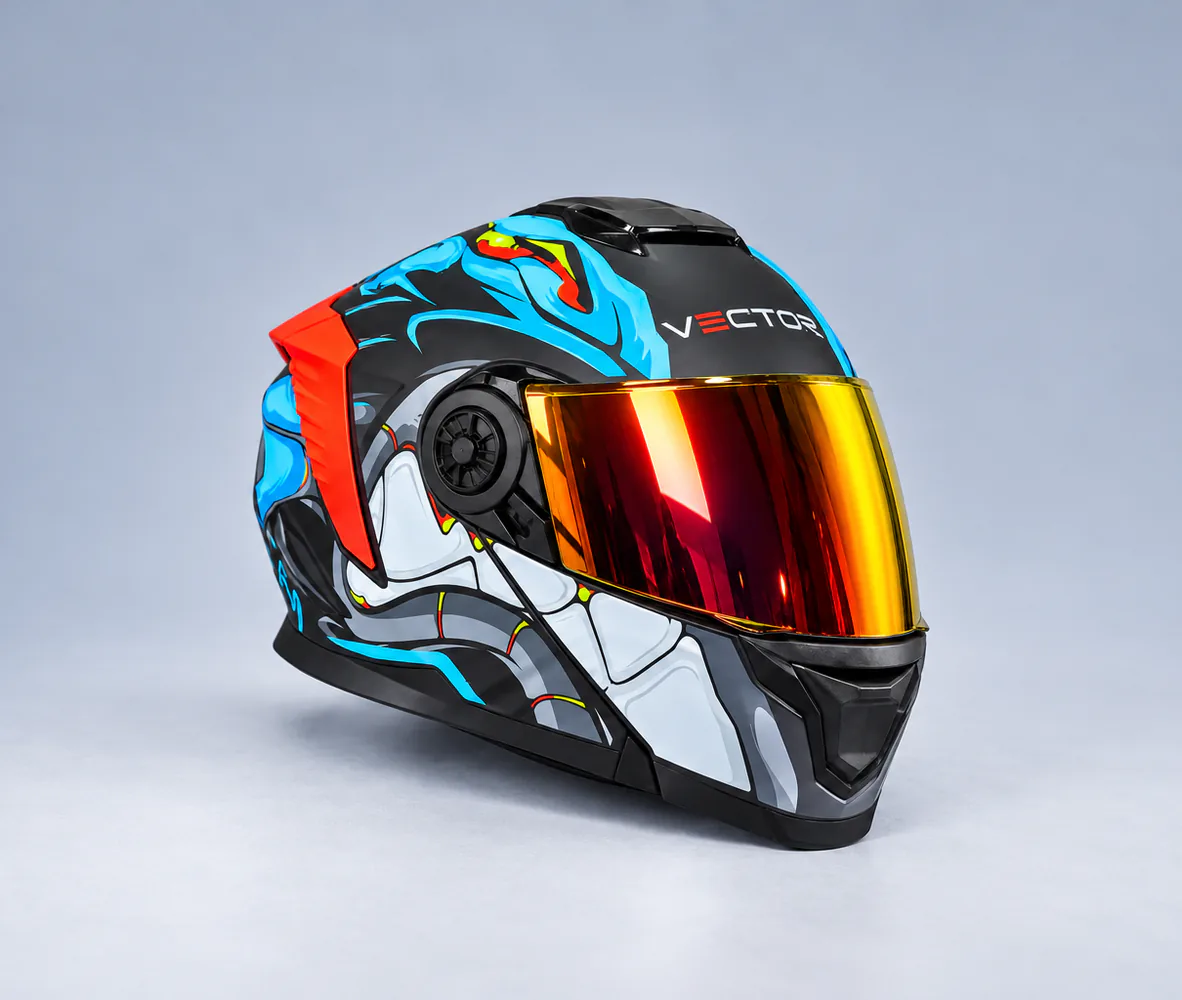
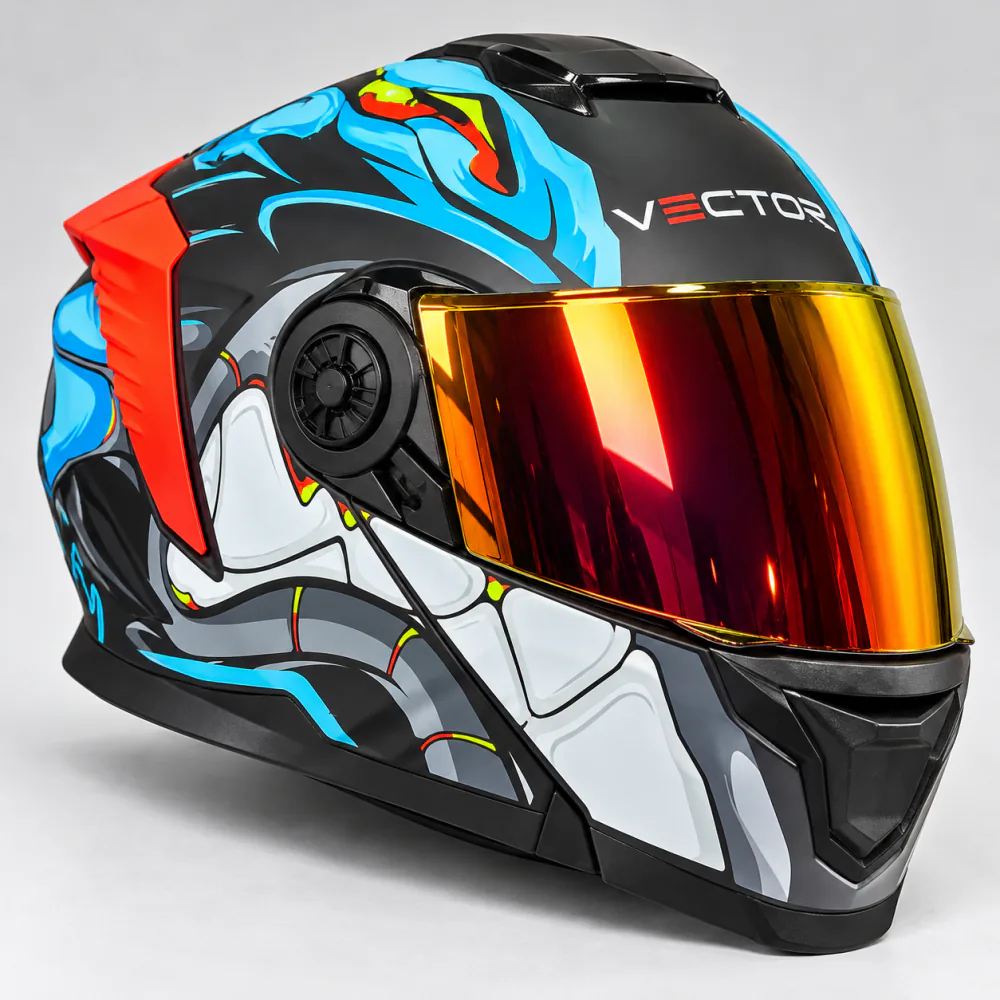
| Vector VT-265 Modular | VECTOR VT265 DOT FMVSS No. 218 CERTIFIED, plus a size sticker (M 57-58, XL 61-62, XXL 63-64) and a round "QC PASS 08" | A complete DOT-format label with brand and model |
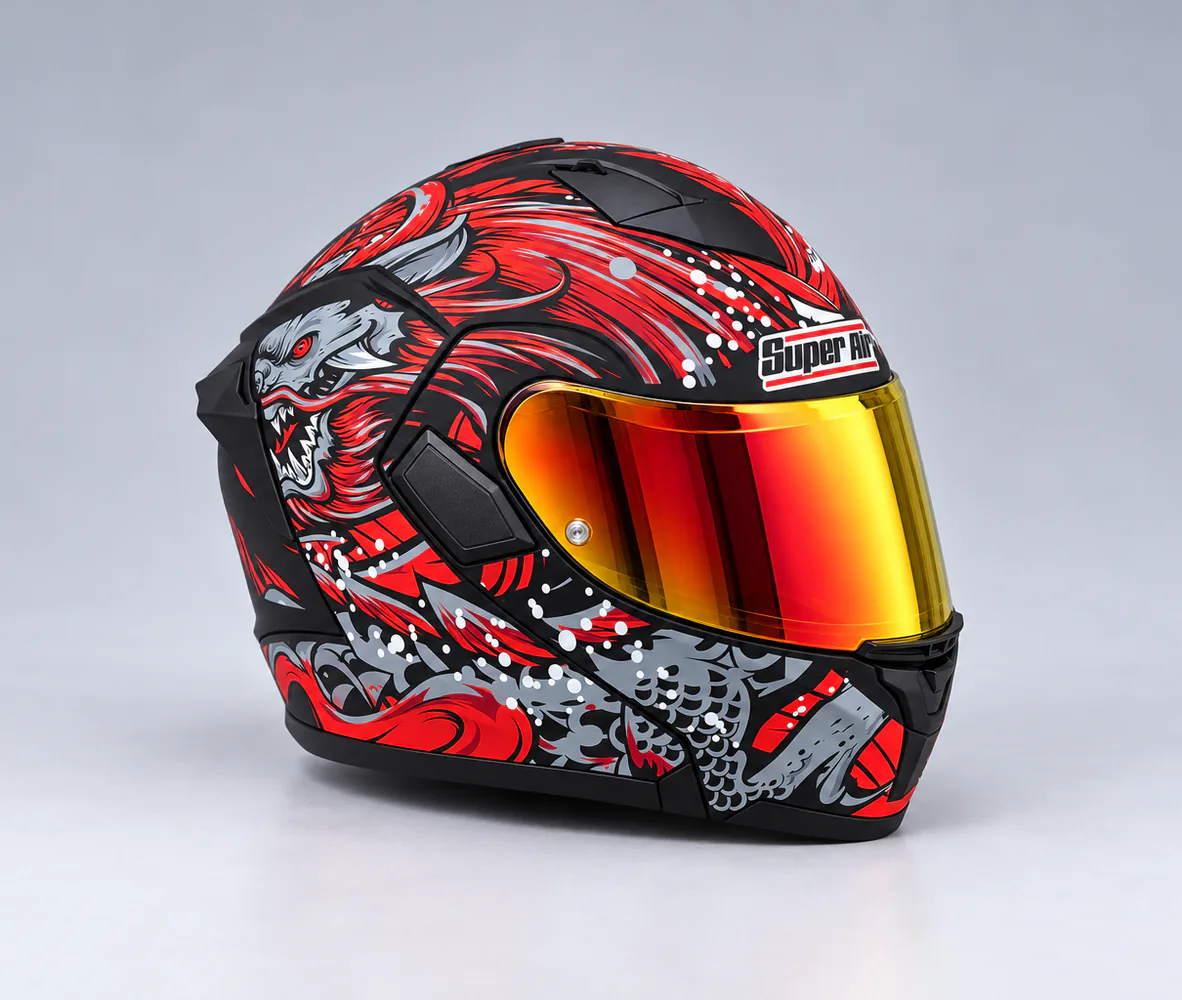
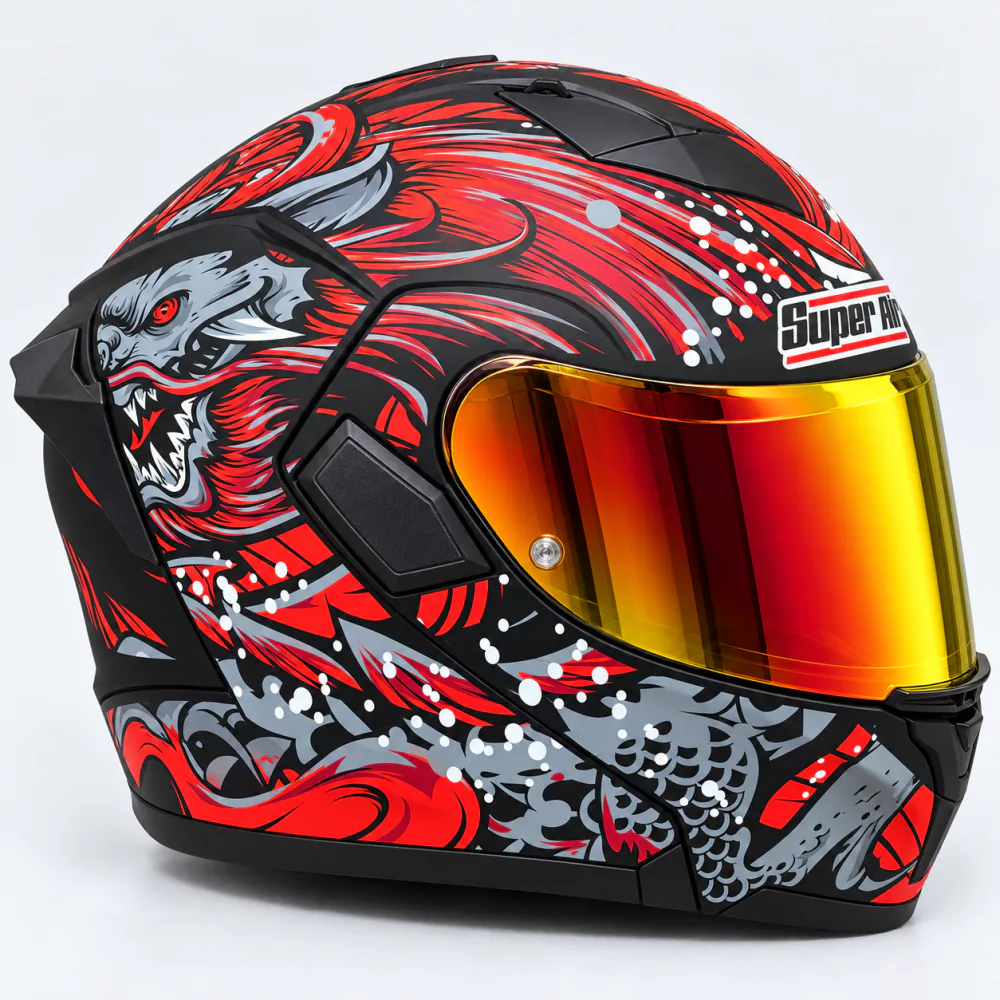
| Super Air SP-918 Pro | Super Air / SP-918 PRO / DOT / FMVSS NO. 218 / CERTIFIED, size sticker L 59-60, "QC PASS 06" on the visor | Complete DOT-format label |
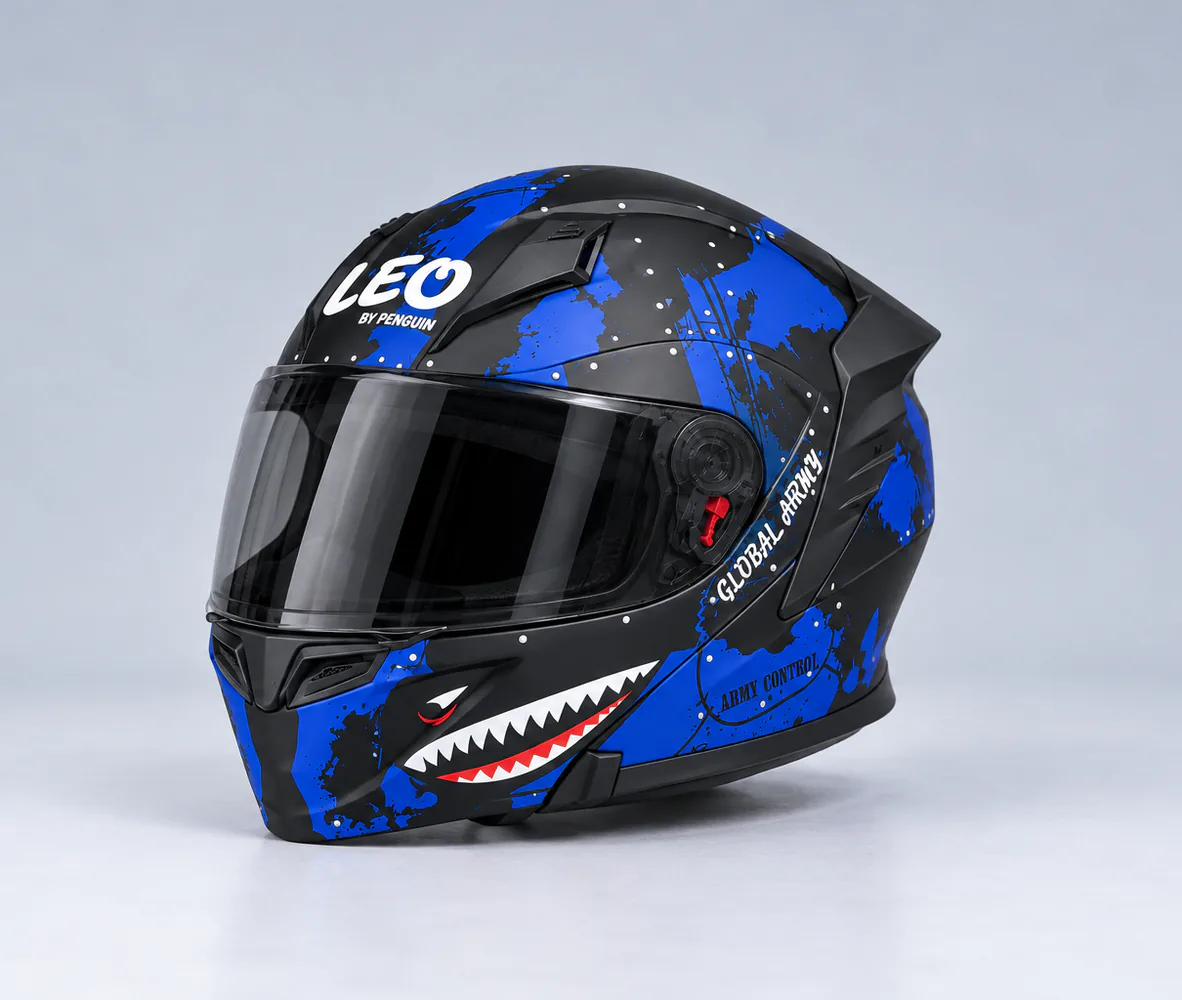
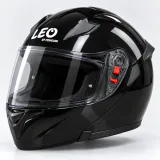
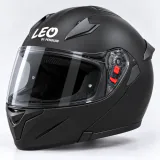
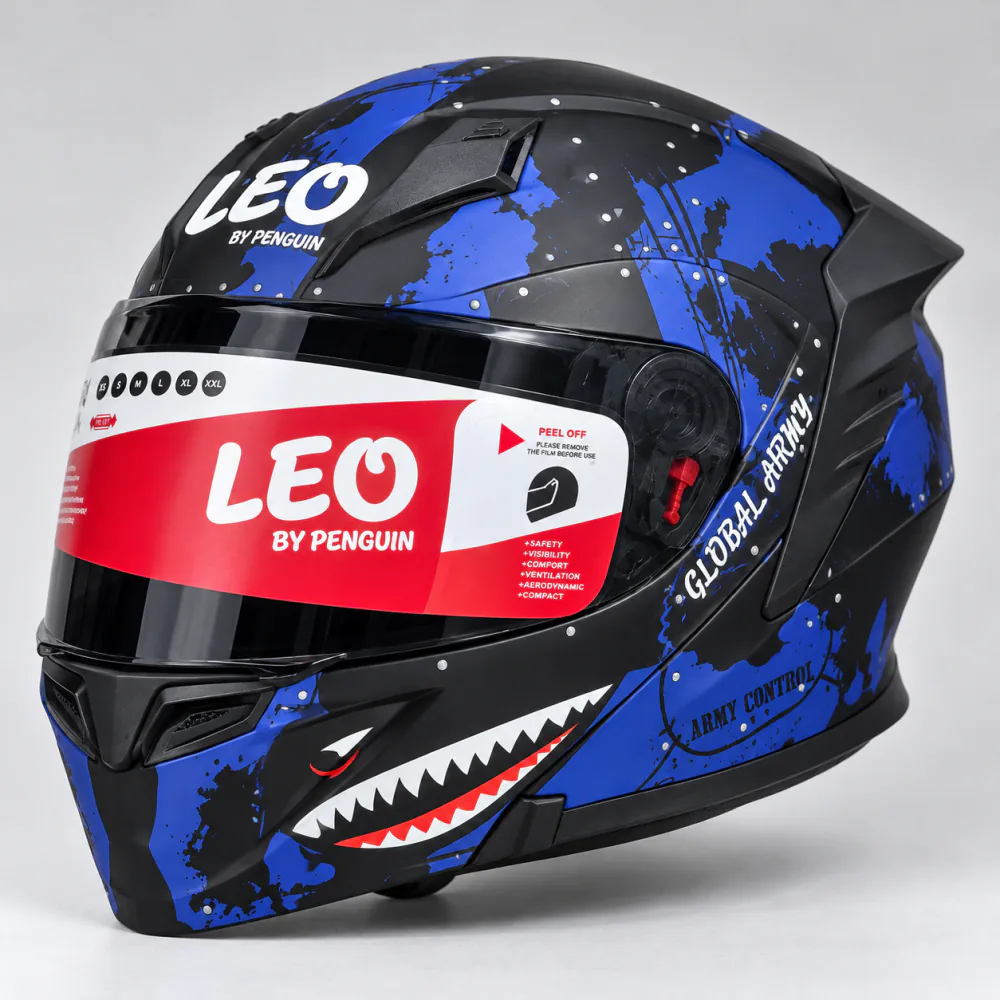
| LEO by Penguin PG 107 | Hexagonal PENGUIN / PG 107 / DOT / FMVSS No. 218 / CERTIFIED, size stickers M 57-58, L 59-60, XL 61-62 | Complete DOT-format label |
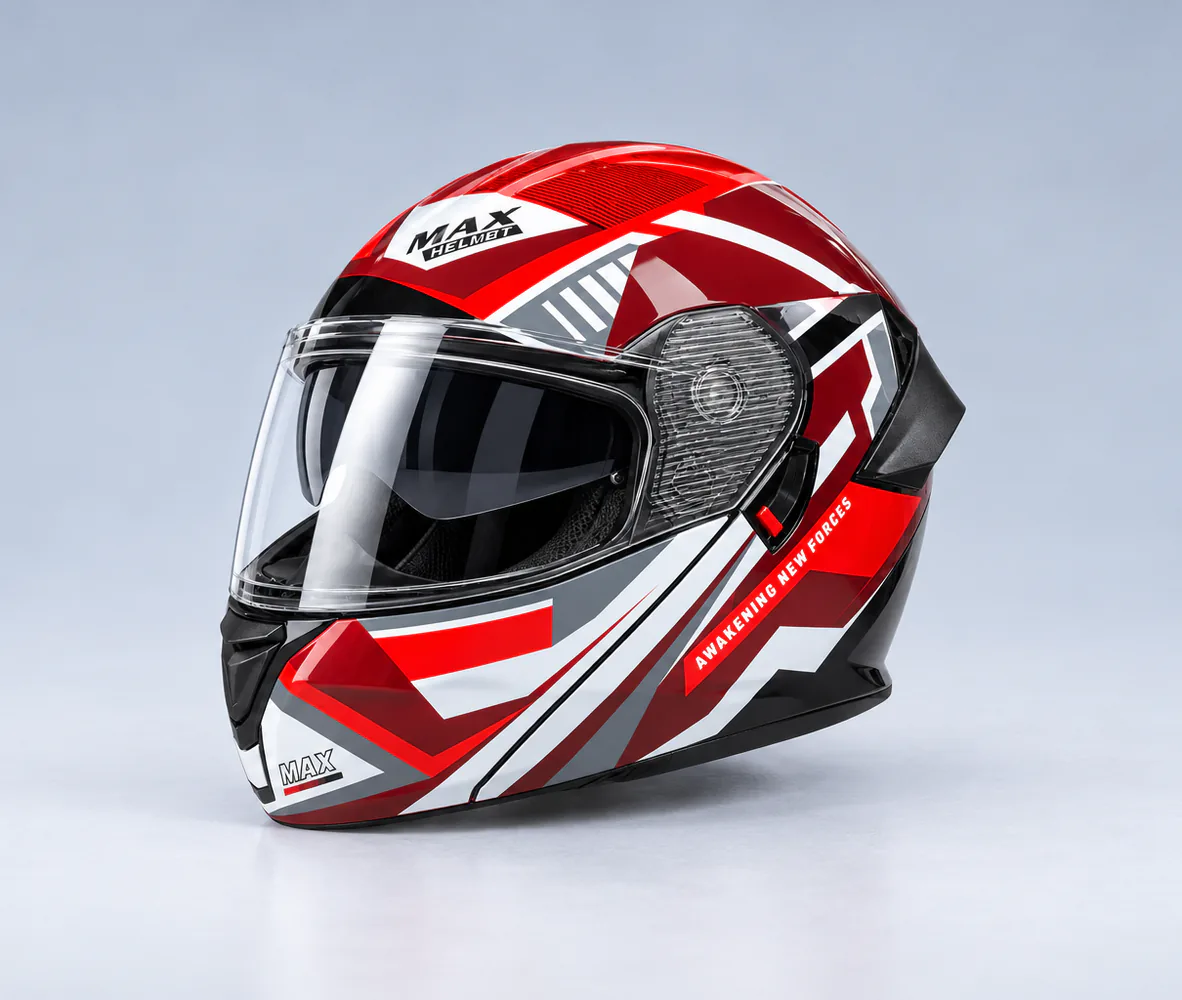
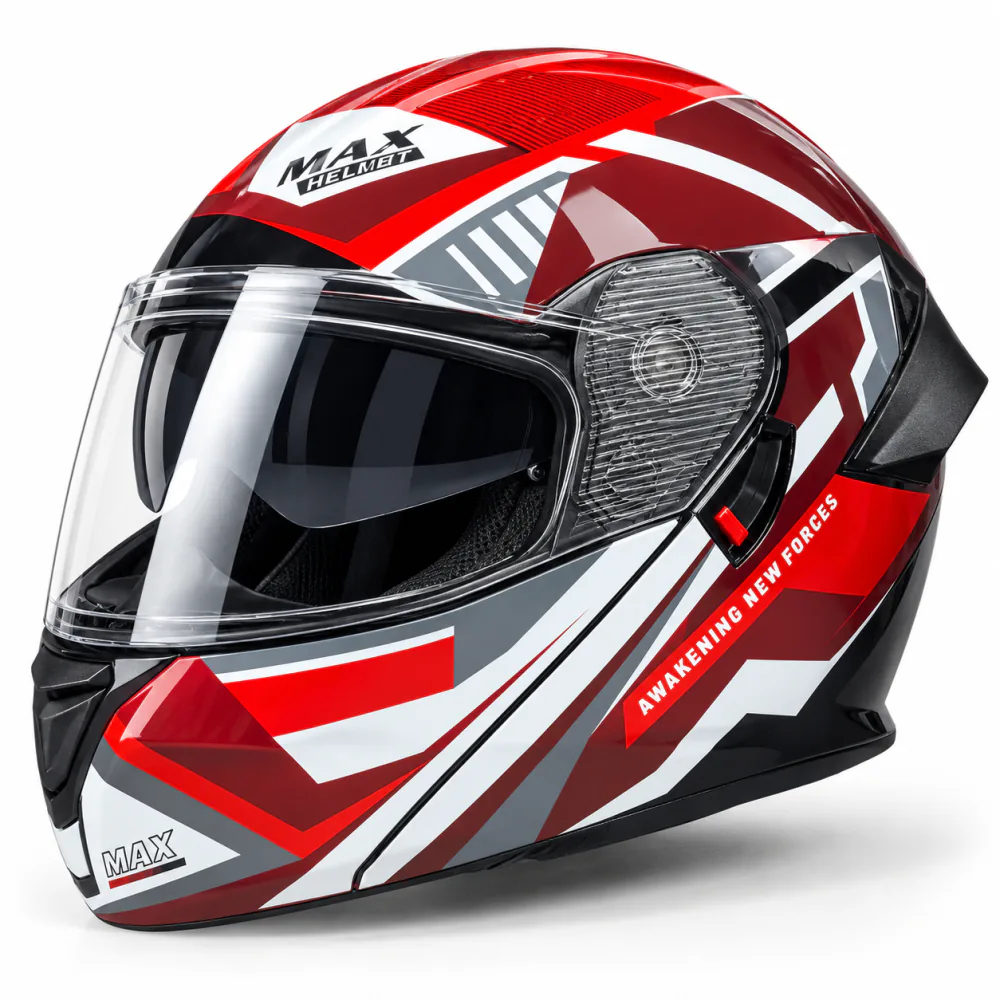
| MAX 909 Modular | 909 DOT FMVSS No. 218 CERTIFIED, a "BPS CERTIFIED Product Safety Lic No Q-5017" sticker and a holographic ICC sticker | DOT claim plus Philippine-market stickers we cannot check |
| AXK 909 Modular | 909 DOT FMVSS No. 218 on the camouflage unit, but 900 DOT FMVSS No. 218 on the gloss black unit | Two model numbers on one product: the model line does not match |
| BMT Half Face, Cream | A CCC mark only | Chinese certification; no DOT or ECE |
| FM Helmet 816 Open Face | No DOT, ECE, ISI, PS or CCC mark; a white "ABS" sticker; the visor sticker's Size field is blank; the side decal reads "SAEFTY FIRST 816", misspelt as printed | No certification, and we do not claim one |
| Penguin Chain Graphic Modular | No DOT or ECE mark; size roundels XL 61-62 and M 55-57 | No certification |
Three things we learned from reading these labels, which apply to any helmet you buy:
- "QC PASS" is not a certification. It is a factory's own inspection sticker. Two of our DOT-labelled helmets carry one; it adds nothing to the DOT claim.
- A model mismatch is worth noticing. The AXK 909's gloss black unit says 900 on its DOT sticker. The helmets look the same, but a label that does not name the helmet it is stuck on is exactly what the DOT rule's "precise model designation" is there to prevent. We list it as AXK 909 because that is the product and the camouflage unit's label; our AXK helmet guide explains it.
- A sticker from another market proves nothing here. The MAX 909's BPS and ICC stickers belong to the Philippine import-clearance system, where every imported helmet batch needs an ICC sticker (MindaNews). We cannot look that licence up, so we report it and claim nothing from it.
What Can a Seller in Pakistan Verify, and What Can't It?
Being straight about this is the whole point of a label guide.
What we can do, and do:
- Read and record every label visible in the photos of the helmets we sell, and state it on the product page.
- Say plainly when a helmet carries no certification mark (such as the FM, YXYT, KAIFA, ANEYA and Penguin chain helmets) and price it as a city helmet.
- Flag mismatches like the AXK 900/909 sticker instead of hiding them.
- Tell you the size range printed on the units we have catalogued, so you buy in centimetres, not letters.
What nobody selling helmets in Pakistan can honestly claim:
- That a DOT-labelled helmet passed FMVSS No. 218. DOT is self-certified, and the only testing happens in the US.
- That a helmet meets the Pakistani standard. It is not enforced and we have seen no helmet carrying it.
- That a helmet is safe in a crash because of its price or brand. We have not crash-tested any helmet.
When a listing anywhere says "100% DOT certified" or "ECE approved" with no photo of the label, ask for the photo.
How to Check a Helmet Is Original When It Arrives
Pay cash on delivery, open the carton in front of the rider, and run through this:
- Find the label and read every line. For DOT: brand, model, DOT, FMVSS No. 218, CERTIFIED. For ECE: a sewn tag with E-number and a 06 approval number. More detail on DOT fakes is in our DOT certified helmet guide.
- Check the model on the label matches the helmet you ordered.
- Look inside for the maker, size and month/year of manufacture.
- Press the liner. NHTSA says a compliant helmet has firm foam about an inch thick; soft packing foam is a warning sign (NHTSA).
- Fasten and pull the strap. The buckle must not slip and the rivets must not move.
- Do a price reality check. A "Shoei" or "LS2" at a local-helmet price is almost certainly a copy; see the imported helmet guide.
How Should a Helmet Fit?
A certified helmet that is loose protects less than it should, so fit is part of safety, not comfort.
Measure: wrap a soft tailor's tape round your head about 2 cm above the eyebrows and over the widest part at the back. Take it twice and keep the larger number in centimetres. Between two sizes, go down: the liner beds in by 3-5 mm over the first few weeks. The full chart is on our size guide.
Buy by centimetres, not letters. On the units in our own catalogue, an M on the Vector VT-265 and the LEO PG 107 reads 57-58 cm, but an M on the Penguin chain graphic modular reads 55-57 cm. Same letter, different heads. Send your measurement on WhatsApp before you order and we tell you which size of that model to take.
Fit test on delivery:
- Cheek pads press lightly on your cheeks.
- With the strap fastened, the helmet moves your skin when you turn your head; it does not slide over it.
- Push up at the back: the helmet must not roll forward off your head.
- Two fingers fit under the strap, no more.
If the size is wrong, we swap it free within seven days, unused and with the visor film still on.
Which Helmet Should You Buy?
- For highway speed or a 150cc bike: a full face or modular with a complete DOT label that fits, or a genuine ECE 22.06 helmet if your budget reaches it. Start with our full face helmet guide and the flip up shelf.
- For short, slow city trips: an open face is legal and cooler, but it has no chin protection and none of ours carries a certification. The open face shelf says so on every product.
- For a pillion: a second helmet that fits them. The law covers the pillion in Lahore and Islamabad.
Prices for every helmet we sell are in our helmet price in Pakistan guide, and the brand-by-brand view is in best helmet brands in Pakistan.
FAQs: Helmet Safety Standards in Pakistan
Which helmet safety standard is required in Pakistan?
None. Section 89-A of the Provincial Motor Vehicles Ordinance 1969 requires a crash helmet for rider and pillion, but the law does not prescribe a helmet standard. A national standard was developed in 2022 and recommended for PSQCA's mandatory list, but we have found no notification that made it compulsory.
Is ECE better than DOT?
ECE 22.06 helmets are tested by an approved lab before sale, and the approval label is sewn onto the chin strap with an approval number starting 06. DOT helmets are certified by their own maker under the US rule FMVSS No. 218 and tested by the US regulator only after sale. A genuine ECE 22.06 label is the stronger evidence.
How can I tell if a helmet sticker is fake?
A genuine DOT label sits on the outside back of the shell and reads the brand, the model, DOT, FMVSS No. 218 and CERTIFIED, with an inside label giving the maker, size and date of manufacture. A bare DOT sticker with no model or standard number, or a model on the label that does not match the helmet, is a warning sign.
What does the CCC mark on a helmet mean?
CCC is China Compulsory Certification. Motorcycle helmets sold in China need it under the GB 811 standard. It is not a DOT or ECE approval, and it cannot be checked from Pakistan.
What is the fine for not wearing a helmet in Pakistan?
As of October 2026 the no-helmet fine in Punjab is Rs 2,000, unchanged in the May 2026 revision, and a Rs 10,000 e-challan has been reported in Karachi. Islamabad requires a helmet for rider and pillion; check the current amount with Islamabad Traffic Police.
Does Bike Markaz test helmets?
No. We read and record the label on every helmet we sell and print it on the product page, and we say when a helmet carries no certification. We have not crash-tested any helmet, so we never call a helmet certified because a sticker says so.
Sources
Checked on 15 October 2026.
- US Code of Federal Regulations, 49 CFR 571.218 (FMVSS No. 218, Motorcycle helmets), labelling section S5.6: law.cornell.edu
- NHTSA, "How to Identify Unsafe Motorcycle Helmets": nhtsa.gov
- Singapore Police Force, "Updated standards for motorcycle helmets" (UN R22.06 label), 9 September 2025: police.gov.sg
- SHARP (UK Department for Transport), "ECE R22-06: what you need to know", 4 September 2024: sharp.dft.gov.uk
- Snell Memorial Foundation, M2025 information card: smf.org
- China Certification, "New Standard for Motorcycle Helmets GB 811-2022": china-certification.com
- MindaNews, "DTI to give ICC stickers for motorcycle helmets", August 2012: mindanews.com
- Pakistan Safety Council, "Helmet safety" (PMVO 1969 s. 89-A; no prescribed standard): psc.org.pk
- Pakistan Today, "Pakistan finally develops standard for motorcycle helmets", 21 July 2022: pakistantoday.com.pk
- 24 News HD, Punjab traffic fines revision, 14 May 2026: 24newshd.tv
- ProPakistani, Karachi Rs 10,000 no-helmet e-challan, 9 May 2026: propakistani.pk
- Dunya News, Lahore helmets for riders and pillions, January 2025: dunyanews.tv
- Geo News, Islamabad helmet mandatory for pillion riders, July 2025: geo.tv
- World Health Organization, "Road traffic injuries" fact sheet: who.int
- Bike Markaz catalogue records: the label readings in the table above come from the supplier photos catalogued for each helmet (October 2026).
Safety disclaimer: this guide is general information, not legal or professional safety advice. No helmet prevents every injury. Read the label on your own helmet, wear it fastened on every ride, and follow your local traffic rules.
Related guides:
Written, checked and last updated by Rooh Ullah of Bike Markaz on . Prices are our catalogue prices on that date; the product page always shows today's. How we write our guides
Products mentioned
 NEW-20%
 NEW-26%
 NEW
 NEW